Herzoslovakia as a republic
The Secret of ChimneysHerzoslovakia as a republic is the political settlement that followed the overthrow and killing of King Nicholas IV and Queen Varaga. The republic remained in place for about seven years, but it did not erase the monarchy as a political possibility: royalist restoration, the Obolovitch succession, and a proposed foreign-backed loan made the former royal order a live issue again.
Revolution and the republic
In Anthony Cade’s account, the monarchy’s crisis began with Nicholas IV’s marriage to a Paris music-hall performer who was crowned Queen Varaga. Nicholas had her presented as Countess Popoffsky, with an invented claim to Romanov ancestry, and won ministerial acceptance of the match. But royal approval could not settle popular opinion. Cade describes Herzoslovakians as aristocratic and reactionary, with strong expectations that their monarchs should be of genuine royal standing; discontent followed, along with repression and eventually an uprising.
The revolution’s outcome was decisive: insurgents stormed the palace, killed the king and queen, and proclaimed a republic. Cade says that the country remained a republic thereafter, while also describing continued political violence, including the assassination of presidents. His account therefore presents the republic as an established regime born from the overthrow of the royal family, but not as a guarantee of political calm.
The unresolved royal question
The republic’s history left the monarchy available as an alternative rather than making it irrelevant. News reports mentioned hints of a restoration, and Jimmy McGrath reasoned that Nicholas IV’s lack of a son did not mean the Obolovitch dynasty had ended: other relatives could still furnish a claimant. That distinction between a king’s direct descendants and the wider dynasty becomes consequential later, when the succession must be considered after Prince Michael’s death.
George Lomax identifies Prince Nicholas as, in all probability, the next heir. Superintendent Battle later specifies the relationship: Prince Nicholas Obolovitch is the first cousin of Prince Michael Obolovitch. The succession thus links the republic’s immediate political crisis to a surviving branch of the former royal house, even though the evidence does not establish that the republic itself formally recognizes a restored monarch.
Restoration, finance, and secrecy
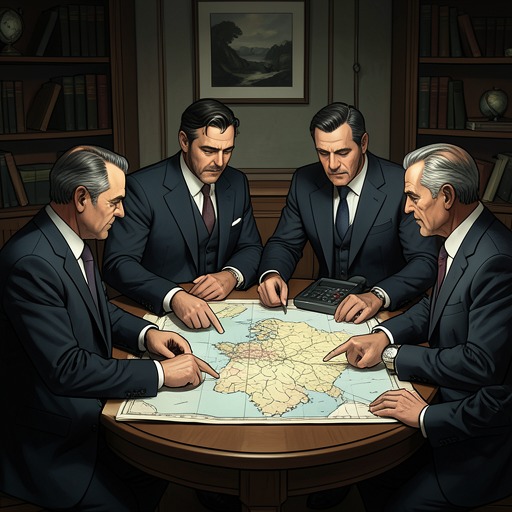
The proposed restoration is presented not simply as a domestic constitutional question but as a political and financial arrangement. Lomax tells Lord Caterham that the people of Herzoslovakia wish to restore the monarchy and are prepared to offer the crown to Prince Michael, who has the support and encouragement of the British Government. In return for a loan of about a million, Michael is prepared to grant concessions to Isaacstein and Company. The proposed crown, diplomatic backing, and commercial terms are therefore bound together.
That arrangement makes Count Stylptitch’s memoirs politically dangerous to its advocates. Lomax argues that their publication at that juncture could ruin the restoration project, and urges discretion when the terms of the deal are spoken aloud. The republic’s political future is consequently entangled with the effort to suppress material that might disrupt negotiations; secrecy becomes part of how the would-be restoration is managed.
Succession and concealed identity
The death of Prince Michael sharpens the question of who could inherit the throne. Battle points to Prince Nicholas as the next heir, while noting that he had been believed to be in the United States, raising money on his expectations. The claim to the crown is thus connected to practical preparations abroad as well as dynastic descent.
At the end, Anthony Cade identifies himself as Nicholas Sergius Alexander Ferdinand Obolovitch. He explains that he had spread the report of his own death, not that he had literally been killed, and that he had left the Congo under the name Anthony Cade. This revelation redefines the succession: the apparent absence of the heir was itself a constructed identity, and the man who has moved through the political intrigue as an outsider is the royal claimant on whom a restoration could turn.
Political significance
The republic’s persistence and the return of royalist plans create the central tension in Herzoslovakia’s political background. Revolution has removed the reigning dynasty from power, yet dynastic inheritance continues to structure later choices; a potential monarch is discussed in terms of public restoration, governmental support, and a loan tied to concessions. The result is a political order in which republican rule is real but contested, and the old monarchy remains active through memory, money, and concealed identity.